
Why Chronic Pain Medications Don’t Fix Chronic Pain: What NSAIDs, Steroids, Anesthetics, and Gabapentin Actually Do

Updated: Aug 21

TL;DR
The most commonly used medications for chronic pain all share one thing in common. They reduce the signal without addressing the source. Some of them, particularly NSAIDs, can actually double the duration of your pain through a mechanism almost no one explains. Understanding how each medication works at a physiological level, and why that mechanism falls short, is one of the most important steps toward understanding why you are still in pain, and what can actually move the needle.
What Most Patients Are Told
If you are living with chronic pain, you have likely been handed a prescription or told to take something over the counter. The explanation that usually comes with it sounds reasonable: this medication will reduce your inflammation, block your pain signals, or calm your nervous system down.
What is almost never explained is what the medication is actually doing inside your body — and more importantly, what it is simultaneously failing to do.
Most chronic pain patients are never told that the same drugs designed to reduce their suffering can, in specific and well-documented ways, prolong it. Not because the medications are being prescribed carelessly, but because the conversation rarely goes deep enough to explain the full picture.
That is what this article is about.
Where The Conventional Explanation Breaks Down
The conventional model of pain management treats symptoms as the target. Reduce the pain signal. Suppress the inflammation. Block the nerve. And to be clear, in acute situations, many of these tools are appropriate and genuinely helpful.
The problem is that chronic pain is not an acute situation. And when these same tools are applied indefinitely, without addressing what is driving the pain in the first place, they create a situation where the patient feels marginally better day to day but never actually heals.
To understand why, you need to understand a few key pathways. And once you do, the limitations of each medication become obvious.
The Pathway Most Providers Never Draw Out For You
Before getting to the medications themselves, there is one piece of foundational biology that makes everything else make sense.
When a cell membrane is exposed to stress, whether from physical tissue damage, an infection, or even a diet loaded with the wrong types of fat, it releases a compound called arachidonic acid. This kicks off what is known as the acute inflammatory pathway. From there, the pathway splits in two directions.
The first direction produces white blood cells. This is the part of the response you want. It fights infection, recruits immune cells, and begins repairing damaged tissue.

The second direction produces compounds called cycloendoperoxides, which break down further into thromboxanes, prostacyclins, and most importantly, prostaglandins. Prostaglandins are responsible for producing pain, inflammation, redness, and heat.
This is the pathway that virtually every common pain medication is targeting. But where each medication intervenes in that pathway, and what it blocks in the process, is what separates them, and what determines the unintended consequences that follow.
Over-The-Counter Medications
How They Work
Ibuprofen, Advil, Aleve, and even Tylenol fall into the category of NSAIDs (non-steroidal anti-inflammatory drugs). They work by blocking two enzymes in the arachidonic acid pathway called COX-1 and COX-2.

Block those enzymes, and the downstream production of prostaglandins drops significantly. Less prostaglandins mean less pain, less inflammation, less redness, less heat. On the surface, that sounds like exactly what a chronic pain sufferer needs.
Here is where it gets complicated.
The Part Nobody Tells You About Prostaglandins
Prostaglandins are not purely destructive. In the body, almost nothing is. Prostaglandins also perform three functions that are critical to your health: they protect the lining of your gut, they support kidney blood flow, and they assist with platelet formation.
When NSAIDs are taken daily — which is the reality for many people living with chronic pain — those protective functions are being suppressed along with the pain signals. This is why long-term NSAID use is directly associated with ulcers, acid reflux, kidney disease, and bleeding disorders. These are not rare or unusual side effects. They are the predictable consequence of blocking a pathway that was also doing important protective work.
But the most consequential thing most patients are never told is this.
NSAIDs Can Actually Double the Duration of Your Pain
Prostaglandins, while producing pain and inflammation, also trigger a positive feedback loop that activates a compound called lipoxin A4. This is a specialized white blood cell whose entire job is to clear the inflammation produced on the other side of the pathway by prostaglandins.

Think of it this way. The tissue damage or infection happens upstream. The prostaglandins are downstream, making you feel awful — but they are also signaling the body to begin the process of resolution. When you block the COX enzymes with an NSAID, you reduce how bad you feel. But you have also cut off the signal that activates the clean-up crew.
The inflammation has been created. The damaged tissue is still there. But the mechanism designed to clear it and restore the tissue to health has been interrupted. This is the physiological explanation for why research has found that NSAID use can double the duration of pain and inflammation. The medication is not treating the condition. It is muting the alarm while the fire continues to burn.
The Natural Alternative
Fish oil, specifically high-quality omega-3 fatty acids, works on this pathway in a fundamentally different way than NSAIDs do.
It is worth understanding why the pathway gets activated in the first place. A cell membrane does not require physical injury to release arachidonic acid. A diet consistently high in omega-6 pro-inflammatory fatty acids (which describes the standard Western diet) can trigger that same release chronically, without any injury at all.

Omega-3 fatty acids from fish oil do not block the pathway at a single enzyme the way NSAIDs do. They modulate the entire system. The result is that your body still produces appropriate amounts of inflammation when it needs to — which is necessary for healing — and it also activates the resolution side of the pathway to clear that inflammation once it has done its job.
This is not semantics. The difference between suppressing inflammation and resolving it is the difference between temporary relief and actual recovery.
Steroids
How They Work
Steroids work higher up in the arachidonic acid pathway than NSAIDs do. Rather than blocking the COX enzymes downstream, they block the release of arachidonic acid from the cell membrane in the first place. Less arachidonic acid means less of everything that follows. Less white blood cells, less prostaglandins, less pain, less inflammation.

For a patient with significant inflammatory pain, the relief can be dramatic and fast. And that actually serves a legitimate diagnostic purpose.
Where Steroids Are Still Useful
If a patient takes a short course of steroids and their chronic pain resolves significantly within a couple of days, that tells us something important: their pain is being heavily driven by inflammation. If there is no improvement at all, that tells us the pain is being driven by something else (central sensitization, structural dysfunction, nervous system dysregulation), and that information is genuinely useful for tailoring the treatment plan.
As a diagnostic tool used selectively, steroids have real value.
As a long-term treatment, the picture is very different.
Why Blocking the Pathway That High Up Actually Costs You
Because steroids block arachidonic acid release rather than a specific downstream enzyme, they suppress both sides of the inflammatory pathway simultaneously. The white blood cells that fight infection and repair damaged tissue are reduced along with the prostaglandins. Long-term immune suppression is the most widely known consequence, but it is far from the only one.
Steroids also dysregulate blood glucose, which matters enormously in chronic pain because elevated blood sugar independently drives inflammation. They disrupt sleep, which is one of the primary windows during which the body clears inflammatory waste and repairs tissue. They cause fluid retention, which means the inflammation that has been created has fewer mechanisms to clear. And they can contribute to muscle loss — which, in someone already dealing with chronic pain and impaired movement, compounds the problem considerably.
The Natural Alternative
The same omega-3 fatty acid modulation that applies to NSAID alternatives applies here. A diet low in omega-6 pro-inflammatory fats and supported by adequate omega-3s reduces the availability of arachidonic acid naturally without suppressing immune function, disrupting sleep, or destabilizing blood sugar.
The difference is that this approach works upstream by changing the environment, not by blocking a pathway your body needs.
Anesthetics
How They Work
Anesthetics like lidocaine, bupivacaine, and ropivacaine work by blocking the sodium-potassium channels on nerve cells. To understand why that matters, it helps to briefly understand how a nerve fires.
At rest, a nerve is in a balanced state. When it receives a stimulus (pain, pressure, temperature), sodium rushes into the nerve, which generates an electrical signal that travels down the length of the nerve toward the brain. As that signal moves forward, potassium leaves the nerve behind it to reset the nerve, allowing it to fire again. Block the sodium from entering and the potassium from leaving with an anesthetic, and the nerve cannot generate or sustain a signal. Nothing reaches the brain. The pain disappears.
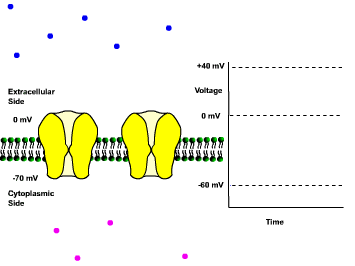
For acute procedural pain, this is an elegant and appropriate mechanism.
For chronic pain, it does not address a single thing that is actually causing the nerve to fire.
There Is No Such Thing As A Hyperactive Nerve
This is a point worth emphasizing clearly.
Nerves do not fire without an input. A nerve that appears to be firing excessively is doing so because something is driving it — inflammation at the tissue level, mechanical dysfunction, central sensitization, unresolved emotional stress. The nerve is not the problem. It is the messenger.
Anesthetics silence the messenger. But the inflammation does not stop. The structural dysfunction does not resolve. The central sensitization continues. The anesthetic wears off, the nerve fires again, and the pain returns. Nothing that was producing the signal has been addressed.
This is not an argument against anesthetics in appropriate contexts. It is an argument for understanding what they are and are not doing, and for building a treatment approach that goes beyond signal interruption.
The Natural Alternative
Capsaicin, particularly in topical form, works on nerve conduction through a different mechanism. Rather than blocking sodium influx, it keeps the nerve in a persistently depolarized state. Sodium can enter, but potassium cannot leave to reset the nerve. A nerve that cannot reset cannot fire again.

The distinction from lidocaine is that this mechanism depletes the nerve's capacity to sustain pain signaling over time, rather than creating a temporary block. It is not a permanent solution either, but for localized pain, it represents a clinically supported alternative with a very different risk profile.
Anticonvulsants
How They Work
Anticonvulsants like gabapentin and pregabalin work at the junction between nerve cells. Specifically at the point where one nerve passes its signal to the next.
When a pain signal travels down a nerve and reaches the nerve ending, a calcium channel opens. That calcium influx triggers the release of glutamate, an excitatory neurotransmitter that carries the signal across to the next nerve. If that next nerve receives enough glutamate, the signal continues moving toward the brain.

Keeping this process in check is a class of inhibitory neurons that release GABA — an inhibitory neurotransmitter that essentially tells nerves to calm down and stop firing when they do not need to.
Gabapentin and pregabalin work by reducing the release of glutamate, which reduces how readily the pain signal jumps from one nerve to the next. For nerve-based pain conditions like peripheral neuropathy, fibromyalgia, and central sensitization this can produce meaningful relief.
Why This Mechanism Creates Problems
The calcium channels being targeted are not exclusive to the nerves generating pain. They exist throughout the entire nervous system. Gabapentin and pregabalin act globally, which is why their side effect profile reads the way it does: dizziness, sedation, brain fog, swelling, and impaired coordination. These symptoms are the direct result of turning down neurological activity across the board, including in systems that have nothing to do with pain.
For someone whose goal is to regain function and quality of life, a treatment that introduces brain fog and fatigue is working against recovery at the same time it is trying to support it.
The Natural Alternatives
Understanding the mechanism points clearly toward what can replicate the effect without the global suppression.
Magnesium reduces glutamate activity through two complementary mechanisms: it helps balance calcium at the nerve ending, and it reduces how much glutamate the receiving neuron takes in. Less glutamate uptake means a less excitable nervous system without sedating every other neurological function in the process.
Increasing GABA is the other target. The body actually synthesizes GABA from glutamate, but the enzyme that drives this conversion is blocked by gluten, which is one of the clearest physiological explanations for why a gluten-free diet produces neurological improvements in many chronic pain sufferers that go well beyond gut symptoms.
Additional ways to support GABA production include adequate vitamin B6, which acts as a cofactor in the conversion process, fermented foods and probiotics, since a significant portion of GABA is synthesized by the gut microbiome, and regular movement, yoga, and meditation, all of which have been shown to increase GABA production.
What All Of These Medications Have In Common
NSAIDs, steroids, anesthetics, and anticonvulsants are four different tools targeting four different points in the pain and inflammation pathways. But they share one defining characteristic.
Each of them reduces a signal without addressing the input generating that signal.
The prostaglandins being blocked by NSAIDs exist because inflammation was produced. The nerve being silenced by lidocaine is firing because something is triggering it. The calcium channel being suppressed by gabapentin is active because glutamate is being released in response to something. None of these medications change what is upstream.
They change only what the patient is able to feel.
This is why most chronic pain sufferers experience relief while on these medications and a return of symptoms when they come off. Sometimes worse than before. Not because the medications failed. But because the conditions producing the pain were never addressed.
If you have been cycling through medications, adjusting doses, or adding new prescriptions on top of existing ones, this is the most important context you can have for understanding why that pattern continues.
The Bottom Line
Your medications may be doing exactly what they were designed to do. That is not the same as treating your chronic pain.
Understanding the difference between suppressing a signal and resolving the cause of that signal is the starting point for care that actually changes the trajectory. Not just the day-to-day experience of living with chronic pain.
Feeling less pain while you stay sick is not recovery. Recovery requires addressing what is actually producing the signal.

Written By:
Dr. Jason Winkelmann
Naturopathic doctor, Chiropractor, Chronic Pain Specialist, and Educator
Frequently Asked Questions
Does this mean I should stop taking my medications?
No. This article is not a recommendation to discontinue any prescribed or recommended medication. What it is intended to do is give you a complete picture of what each medication is and is not doing so that you can have a more informed conversation with your provider about what a comprehensive treatment plan looks like. Medications that reduce your pain signal while you address the underlying drivers are a reasonable part of a broader strategy. Medications used in isolation, indefinitely, as the only intervention, are unlikely to produce long-term resolution.
If omega-3s are so effective, why doesn't my doctor recommend them?
Most conventional medical training focuses on pharmaceutical intervention rather than nutritional biochemistry. Omega-3s do not work as quickly as NSAIDs for acute relief, and the research on them, while substantial, is not as prominently integrated into standard pain management protocols. Their mechanism is also different — they modulate the system rather than blocking a pathway, which makes the effect less immediately noticeable even when the long-term impact is more favorable.
Why does gabapentin cause brain fog if it is just targeting pain nerves?
Because it is not just targeting pain nerves. Gabapentin and pregabalin reduce calcium channel activity throughout the nervous system, including in regions involved in cognition, coordination, and alertness. The brain fog is not a side effect in the colloquial sense — it is a direct consequence of the same mechanism producing the pain relief. You cannot globally suppress neurological excitability and only have it affect the nerves generating pain.
Can I combine natural alternatives with my current medications?
In many cases, yes — but this depends on the specific medications and supplements involved. Magnesium, omega-3s, and B6 all have documented interactions with certain drugs. This is a conversation to have with a provider who understands both the pharmacology and the nutritional biochemistry, and who can evaluate your specific situation rather than applying a general answer.
What does it mean that my body needs some prostaglandins?
It means inflammation is not the enemy — unresolved inflammation is. Prostaglandins are part of the body's healing response. They signal that damage has occurred, recruit the immune response, and activate the resolution process. The goal of treatment should be to resolve inflammation appropriately, not to suppress it indefinitely. When that distinction is made the basis of treatment, the approach looks very different from long-term NSAID or steroid use.


Comments