
Is It Plantar Fasciitis or a Pinched Nerve in My Back?


Heel pain can come from the plantar fascia, from a nerve trapped near the heel, or from a nerve root irritated in the lower back, and these can coexist. Burning, tingling, numbness, or pain that persists at rest raises the possibility of nerve involvement. A hands-on exam of the back, ankle, and foot sorts them out.
Treating your heel for months with no lasting change makes you wonder whether it was ever the right diagnosis, and that question is worth taking seriously.
The Mechanism

The S1 nerve root exits the lower spine, and its branches travel down the back of the leg into the heel and sole. When the root is irritated, a condition called radiculopathy, it can refer pain, burning, or tingling into the heel, sometimes with little or no back pain. Farther down, the inferior calcaneal nerve, also called Baxter's nerve, runs beneath a small muscle of the foot and along the inner heel, where it can be compressed between muscle and fascia. Compression of the posterior tibial nerve behind the inner ankle is tarsal tunnel syndrome. Any of these can produce heel pain that resembles plantar fasciitis.

The two problems are also not mutually exclusive. The double crush phenomenon can exist here too. A nerve irritated at one site tolerates pressure less well at every other site. A person can have degenerated fascia and an irritated nerve at the same time, and when the nerve piece goes unrecognized, treatment aimed at the fascia improves the heel partway and then plateaus. A nerve that has been irritated for long enough also becomes sensitized, so the heel hurts more than the tissue damage alone explains.

The clues tend to differ. Fascia pain is typically sharp, worst with the first steps, tender on the underside of the inner heel, and easier after walking. Nerve involvement tends to bring burning, tingling, numbness, or shooting sensations, pain that lingers at rest or at night, symptoms that change with back position, or heel pain that arrives with low back or buttock tightness.

When It's Something More Serious
Progressive leg weakness, a foot that drags or slaps when you walk, numbness in the groin or saddle area, or any change in bladder or bowel control needs emergency care. New numbness or tingling in the foot if you have diabetes should also be evaluated promptly. Sudden severe heel pain with swelling or an inability to bear weight warrants urgent evaluation as well.
How This Gets Addressed
The first step is an exam that tests the whole pathway from lower back to heel, not only the foot.
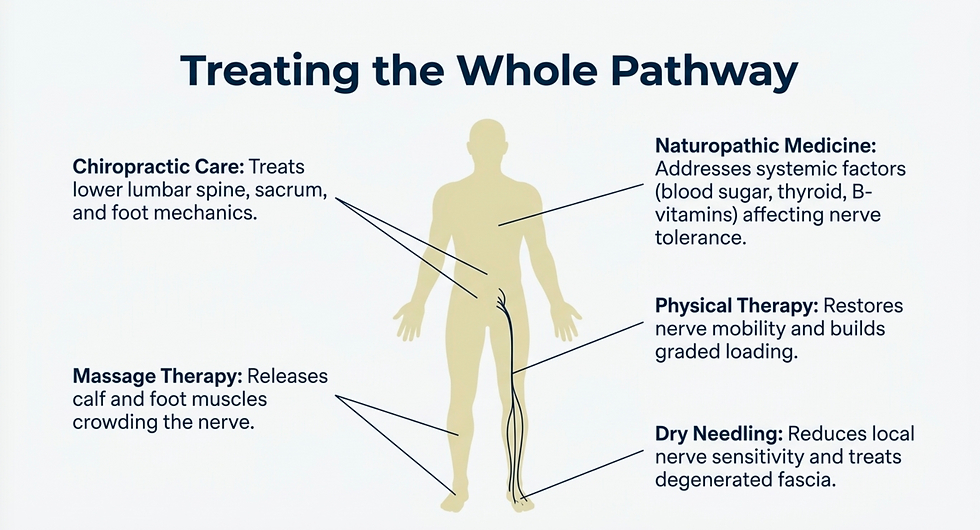
Chiropractic care evaluates and treats the lower lumbar spine and sacrum, where the nerve root originates, along with ankle and foot mechanics.
Dry needling reduces local nerve and muscle sensitivity around the heel and can treat the degenerated fascia directly, and massage therapy releases the calf and foot muscles that can crowd the nerve.
Physical therapy restores nerve mobility and builds graded loading, and naturopathic medicine looks at systemic factors such as blood sugar, thyroid function, and B vitamin status that affect how well any nerve tolerates pressure.
You can learn more about our full approach to plantar fasciitis here.
Most patients improve once the right contributor is identified and treated, and heel pain that had been plateauing often starts moving again within a few weeks of addressing the nerve piece, although a nerve irritated for a long time can take months to settle.

Written By:
Dr. Jason Winkelmann
Naturopathic doctor, Chiropractor, Chronic Pain Specialist, and Educator
Frequently Asked Questions
Can a pinched nerve in my back cause heel pain?
Yes. Irritation of the S1 nerve root can refer pain, burning, or tingling to the heel and sole, sometimes with little back pain. A hands-on exam that tests the back, leg, and foot together is how the source gets identified.
How can I tell if my heel pain is nerve-related?
Burning, tingling, numbness, electric or shooting sensations, pain at rest or at night, and symptoms that change with back position all raise the possibility of nerve involvement. Sharp pain with the first steps of the day that eases with walking fits the fascia pattern better. Since the two overlap, an exam is more reliable than symptoms alone.
Can I have plantar fasciitis and a nerve problem at the same time?
Yes. Compression at one site makes a nerve more vulnerable at others, so degenerated fascia and an irritated nerve can coexist. It is one of the most common reasons heel treatment improves partway and then stalls.


Comments