
Can a Pinched Nerve in the Neck Cause Shoulder or Elbow Pain?
- Jason Winkelmann
- 5 hours ago
- 4 min read

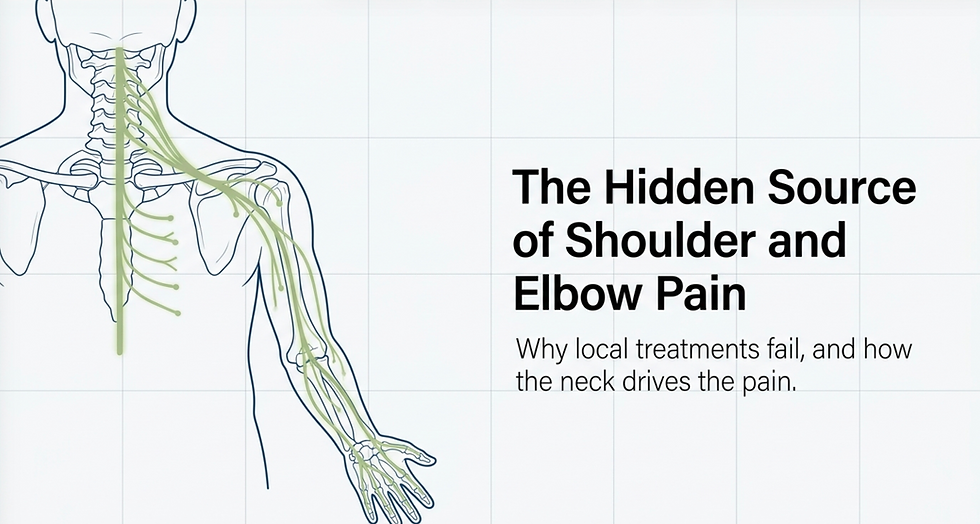
Yes, an irritated nerve root in your neck can cause genuine aching pain in your shoulder or elbow, not just numbness or tingling. This happens because the same cervical nerve roots that carry sensation into your arm also carry signals to the muscles of your shoulder, biceps, and forearm, so irritation at the neck can be felt as deep, local pain in those areas rather than as a classic pins-and-needles sensation.
If you've been treated for a rotator cuff issue or tennis elbow and gotten only partial or temporary relief, this is worth reading closely, because it explains a pattern a lot of patients run into without ever being told why.
Two Different Ways Your Neck Shows Up in Your Shoulder or Elbow

Each cervical nerve root doesn't just carry sensory information, it also carries motor signals to specific muscles down your arm. C5 and C6 supply your deltoid and biceps, C6 also feeds your wrist extensors, and C7 supplies your triceps and wrist flexors. When one of these roots is irritated at the neck, the referred pain often shows up as a deep, aching discomfort in the shoulder or a burning ache around the elbow, because the muscle the nerve supplies becomes sensitized right along with the nerve itself. This is a fundamentally different mechanism than a local rotator cuff tear or tendon injury, even though the pain can feel almost identical, which is why shoulder and elbow treatment aimed at the joint itself often produces only partial relief when a cervical nerve root is actually driving it.

The second piece compounds the first. The same thoracic spine restriction covered in our piece on recurring neck pain doesn't just affect your neck, it also changes how your shoulder blade sits and moves. A restricted, rounded thoracic spine pulls your shoulder blades forward and slightly elevated, which alters the mechanics of your shoulder joint and can create genuine impingement-like stress on the rotator cuff tendons, on top of whatever referred pain the cervical nerve root is already producing. You end up with a real mechanical shoulder problem and a referred nerve problem happening at the same time, in the same location, which is exactly the kind of overlap that makes this so easy to misattribute to the shoulder alone.
When It's Something More Serious
Get evaluated promptly for sudden, severe shoulder pain following a fall or injury, significant weakness lifting or rotating your arm, or pain accompanied by fever, redness, and swelling, which can indicate a tear or infection requiring direct attention. Left shoulder, arm, or jaw pain accompanied by chest pain, shortness of breath, or sweating should always be treated as a possible cardiac event and evaluated immediately.
How This Gets Addressed
Because this usually involves both a referred nerve component and a real mechanical shoulder component, resolving it well means addressing the neck, the thoracic spine, and the shoulder mechanics together.
Chiropractic care, including cervical and thoracic joint mobilization, reduces irritation at the nerve root itself while also correcting the thoracic restriction pulling your shoulder blade out of its normal position.
Massage therapy releases the compensating tension in the muscles around your shoulder blade and rotator cuff that build up from both the referred pain and the altered mechanics, which is often where patients notice the first real difference.
For deep, persistent tension in those same muscles that doesn't fully resolve with massage, dry needling reaches specific trigger points with more precision.
Two additional pieces address what keeps this pattern in place. Physical therapy combines scapular stabilization work, which corrects the mechanical shoulder component directly, with nerve gliding techniques and the same postural retraining covered elsewhere in this series, addressing both mechanisms at once rather than one at a time.
And when inflammation appears to be prolonging recovery beyond what the structural findings would explain, naturopathic medicine evaluates systemic inflammatory contributors through targeted lab testing.
Most patients who've had partial results from shoulder or elbow-focused treatment alone notice a more complete and lasting improvement once the cervical and thoracic contributions are addressed as part of the same plan.
Frequently Asked Questions
How do I know if this is a rotator cuff problem or coming from my neck?
A true rotator cuff injury typically has pain localized to specific shoulder movements and often a clear mechanism, like a fall or repetitive overhead activity. Cervical referral more often has a deep, aching quality that doesn't fully correlate with shoulder movement alone and may fluctuate with neck position. The two frequently coexist, which is why an evaluation that looks at both is more reliable than treating either in isolation.
Can this cause elbow pain that feels like tennis elbow or golfer's elbow?
Yes. Because the C6 and C7 nerve roots supply the wrist and forearm muscles that attach at the elbow, irritation at the neck can produce pain in the same locations as lateral or medial epicondylitis, which is part of why elbow braces and local treatment alone sometimes fall short.
Why didn't treatment focused on my shoulder or elbow help?
If a cervical nerve root or thoracic mechanical restriction is contributing to the pain, treatment aimed only at the shoulder or elbow addresses the local symptom without touching the source, which often produces temporary or partial relief rather than lasting resolution.


Comments