
Why Do I Have Elbow Pain and Another Tendon Problem at the Same Time?

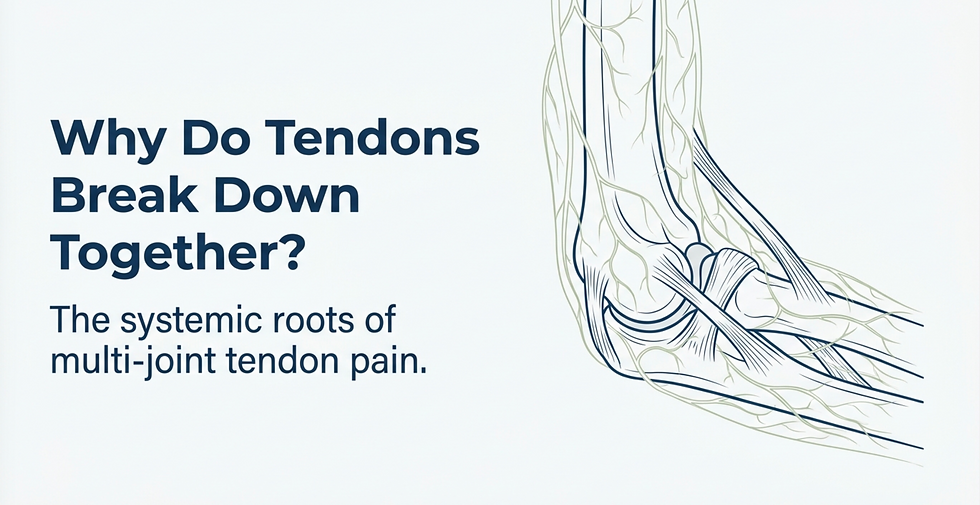
When elbow tendinopathy shows up alongside another tendon problem, such as the shoulder, hip, or Achilles, the common factor is often the body's capacity to repair collagen rather than the mechanical load on each individual tendon. Nutrient status, hormones, blood sugar regulation, inflammation, and sleep all determine whether tendons rebuild between demands.
Watching one tendon problem lead into another can feel like your body is simply falling apart, and it is a reasonable thing to want explained rather than dismissed.
The Mechanism
Tendons throughout the body are built primarily from type I collagen, and producing it is a manufacturing process with specific required inputs. Fibroblasts synthesize the raw collagen, and enzymes then stabilize and cross-link it through a step that depends on vitamin C as a cofactor, along with zinc, copper, and specific amino acids including glycine and proline. A systematic review of musculoskeletal injury research found that vitamin C supplementation increased type I collagen synthesis in tendon healing studies, while a more recent scoping review focused specifically on tendinopathy concluded that vitamin C deficiency is associated with decreased procollagen synthesis and impaired hydroxylation of proline and lysine, directly hindering the tendon repair process. When these inputs run short anywhere in the body, every tendon's repair capacity is affected, not just the one under the most mechanical stress.
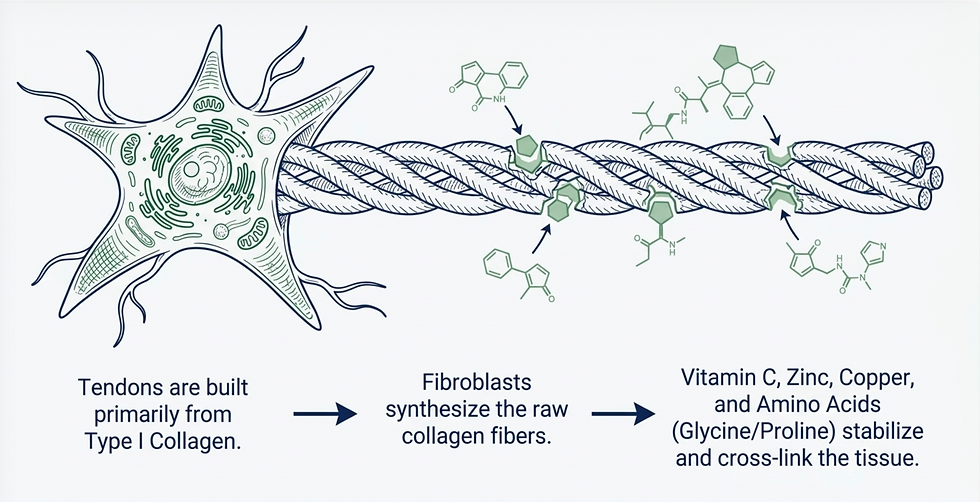
Hormones set the pace for this process as well. Estrogen supports collagen synthesis and connective tissue health, and its decline through perimenopause and menopause is associated with reduced tendon repair capacity, which is one reason multiple tendon problems, elbow, shoulder, and achilles among them, tend to cluster in midlife. Elevated blood sugar contributes through a different route: excess glucose attaches to collagen and forms advanced glycation end products, abnormal cross-links that stiffen tendon tissue and leave it more brittle and less able to repair itself normally.

Sleep and systemic inflammation complete the picture. The majority of tissue repair occurs during deep sleep, and persistently elevated inflammatory signaling pushes tendon cells toward breakdown rather than rebuilding. Each of these factors lowers the threshold at which ordinary daily use turns into a tendon injury, and when the factor is systemic, it does not confine itself to one joint.

When It's Something More Serious
Multiple joints that are painful along with fever, rash, or prolonged morning stiffness warrant evaluation for an inflammatory condition. Tendon pain that develops during or shortly after a course of a fluoroquinolone antibiotic, such as ciprofloxacin or levofloxacin, should be reported to your prescriber promptly, since these medications carry a recognized risk of tendon injury. A sudden pop with loss of strength needs urgent evaluation.
How This Gets Addressed
When several tendons are affected, the internal repair environment deserves attention alongside the mechanical drivers at each joint.
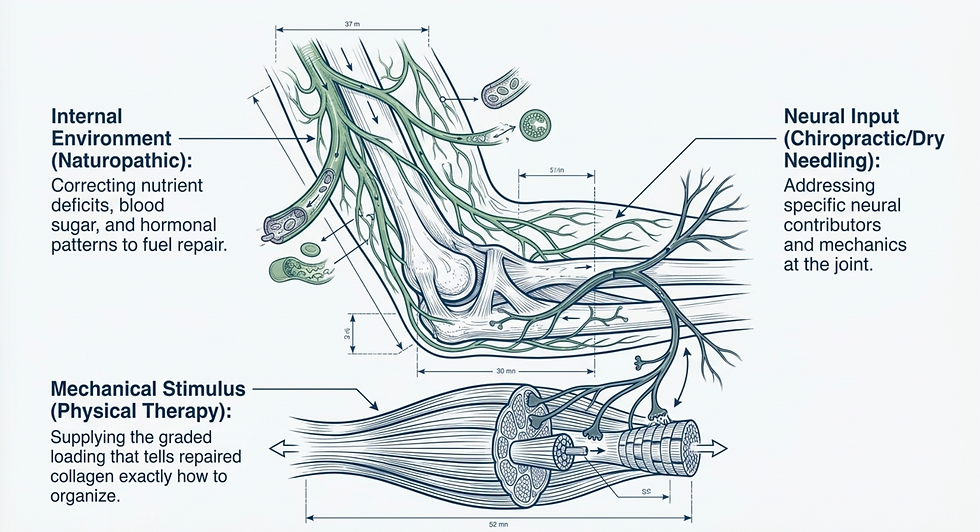
Naturopathic medicine evaluates nutrient status, thyroid function, blood sugar regulation, hormonal patterns, and inflammatory markers, then builds a plan around what the results actually show, since more supplementation is not automatically better without knowing where the deficits are.
Chiropractic care and dry needling address the specific mechanical and neural contributors at each affected joint, while physical therapy supplies the graded loading that tells repaired collagen how to organize at each site.
Together, these give tendons across the body both the materials and the mechanical stimulus they need. You can learn more about our full approach to elbow pain here.
Most patients find tendons that had plateaued across multiple sites begin responding to loading again once the shared repair environment is corrected, although hormonal transitions and metabolic conditions call for ongoing management rather than a single fix.

Written By:
Dr. Jason Winkelmann
Naturopathic doctor, Chiropractor, Chronic Pain Specialist, and Educator
Frequently Asked Questions
Can menopause cause tendon problems in multiple joints?
Declining estrogen affects collagen production broadly rather than at just one site, and tendon conditions including tennis elbow, frozen shoulder, and Achilles tendinopathy are all more common during the menopausal transition. It is one contributor among several, and any decision about hormone therapy belongs with your physician.
What nutrients does the body need to repair tendons?
Collagen synthesis depends on adequate protein, including the amino acids glycine and proline, along with vitamin C, zinc, and copper as cofactors. Research supports vitamin C's role specifically in supporting collagen synthesis during tendon repair, and testing before supplementing is worthwhile since excess of some nutrients can interfere with others.
Can diabetes or blood sugar problems cause tendon issues in more than one place?
Yes. Elevated glucose forms abnormal cross-links in collagen that stiffen tendon tissue throughout the body, and diabetes is associated with tendon problems at multiple sites, often appearing in sequence rather than all at once. If you have several tendon problems, it is reasonable to ask your physician about checking hemoglobin A1c.


Comments