
Can Stress or Anxiety Cause Vertigo?


Yes. Stress and anxiety can cause dizziness and, in some people, a spinning sensation, because the stress response changes breathing, blood flow, and muscle tension in ways that disturb the balance system. They also slow the brain's recalibration after an inner ear problem, which is one reason symptoms tend to worsen during stressful periods.
Being told your dizziness is just anxiety can feel like being dismissed, yet the connection is physiological, it runs in both directions, and it does not mean the symptom is imagined.
The Mechanism

Your balance system and your stress circuitry are wired together. Brainstem pathways connect the vestibular nuclei, which process balance signals, to the brain's threat-processing centers, so the same system that keeps you upright also monitors how safe your body feels. Stress, therefore, does not merely accompany dizziness. It can generate and amplify it in three connected ways.
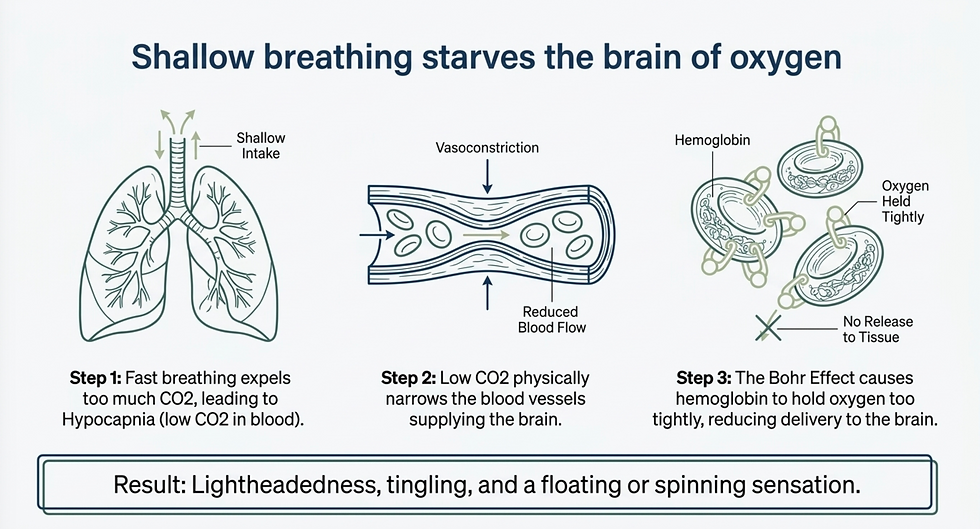
The first is breathing. The sympathetic nervous system speeds and shallows breathing, often without you noticing, and the extra carbon dioxide you exhale leads to hypocapnia, low CO2 in the blood. Low CO2 narrows the blood vessels supplying the brain and makes hemoglobin hold onto oxygen more tightly. The result is reduced oxygen delivery to the brain and a feeling of lightheadedness, tingling, and floating or spinning.

The second is muscle tension. Chronic stress and anxiety tighten the muscles of the upper neck, jaw, and shoulders, and those tissues carry some of the densest position sensors in the body. Tense muscles and restricted joints send noisy signals into the brainstem, which then has to reconcile them with the inner ear and eyes.

The third is recalibration. Vestibular compensation, the brain's relearning of balance after a disturbance, requires movement, sleep, and a calm nervous system, and high sympathetic activity slows it. Worry about the next episode raises that activity further, so dizziness produces anxiety, and anxiety prolongs the dizziness. Stress is rarely the whole cause, but it is often the reason a manageable inner ear or neck problem stays symptomatic.
When It's Something More Serious
Dizziness that is new, severe, or paired with double vision, slurred speech, numbness or weakness, difficulty walking, or a sudden severe headache needs emergency care and should not be attributed to stress. Chest pain, palpitations, or fainting also warrant prompt evaluation, since heart rhythm problems can produce similar sensations.
How This Gets Addressed
Because stress reaches the balance system through the body, treatment works on those pathways.

Chiropractic care restores motion in the upper cervical joints so the brainstem receives cleaner position signals, while massage therapy and dry needling release the chronic tension in the neck, jaw, and shoulder muscles that stress builds.
Physical therapy provides vestibular rehabilitation and graded movement exposure so the brain gets the practice recalibration depends on, and naturopathic medicine addresses the internal drivers of a reactive nervous system, including sleep, stress physiology, blood sugar, and breathing habits.
Each of these targets one of the loops described above. You can learn more about our full approach to vertigo here.
Most patients notice their dizziness becomes less frequent and less reactive to stress once the neck tension, breathing pattern, and recalibration are addressed, although a stressful stretch may still bring back a hint of unsteadiness, which reflects the balance system tracking your stress load rather than a return of the original problem.

Written By:
Dr. Jason Winkelmann
Naturopathic doctor, Chiropractor, Chronic Pain Specialist, and Educator
Frequently Asked Questions
Can anxiety cause a spinning sensation or only lightheadedness?
Both are possible. Fast, shallow breathing more often produces lightheadedness, tingling, and a floating feeling, while a true spinning sensation can occur because stress sensitizes the vestibular system and amplifies signals it would normally filter out. Spinning that is triggered by head position, such as rolling over in bed, points more toward the inner ear and is worth testing directly.
How can I tell if my dizziness is from anxiety or an inner ear problem?
Brief spinning triggered by specific head positions suggests an inner ear cause, while dizziness that flares in crowds or under stress and comes with a racing heart, tingling, or tight breathing suggests a stress-physiology component. Many people have both, and a hands-on evaluation that includes positional testing is the reliable way to sort out how much each contributes.
Can stress make vertigo worse?
Yes. Stress is not known to dislodge inner ear crystals, but it increases neck and jaw tension, heightens vestibular sensitivity, and slows the brain's recalibration, all of which make existing vertigo last longer and feel more intense. Addressing sleep, breathing, and muscle tension often reduces the overall dizziness burden even when the underlying trigger is unchanged.


Comments